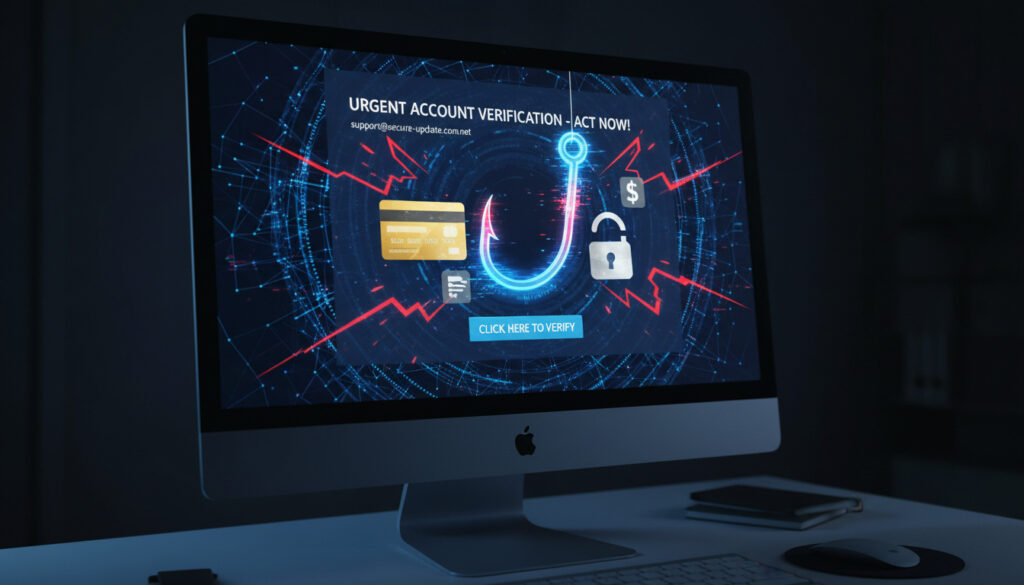
What Is a Phishing Scam – Definition, Examples & Prevention Guide
Phishing scams represent one of the most pervasive cybercrime methodologies active today, involving fraudulent communications specifically designed to deceive recipients into revealing sensitive information or compromising security protocols. Attackers deploy these schemes through email, telephone, or text messages while systematically impersonating legitimate institutions, trusted colleagues, or personal contacts.
The mechanics behind these attacks rely on sophisticated social engineering tactics that exploit human psychology rather than technical software vulnerabilities. Criminals conduct preliminary research on targets, craft convincing messages that trigger emotional responses, and create counterfeit websites capable of harvesting credentials, financial data, or deploying additional malware payloads.
Understanding these threats requires examining their operational evolution, technical varieties, and the specific behavioral indicators that distinguish legitimate communications from fraudulent attempts designed to steal data or funds.
What Is a Phishing Scam?
Fraudulent attempt to obtain sensitive information via deceptive email, telephone, or text communications
Theft of data including passwords, banking credentials, credit card numbers, and personal identifiers
Email serves as the predominant delivery vector, though SMS and voice calls are increasingly utilized
Billions of attempts occur annually, representing a significant portion of reported cybercrimes
Security researchers define phishing as a cybercrime in which malicious actors send fraudulent communications designed to trick individuals into revealing sensitive information or taking actions that compromise security. According to Verizon, the objective involves obtaining account numbers, home addresses, banking details, credit card information, and usernames or passwords to facilitate identity theft and financial loss.
- Phishing accounts for approximately 36% of data breaches according to industry analysis
- Artificial intelligence tools now enhance phishing sophistication, creating grammatically flawless messages
- Spear phishing campaigns target specific individuals with personalized content based on open-source research
- Mobile phishing through SMS messaging continues rising year-over-year
- Attackers increasingly exploit social media platforms to establish fraudulent accounts mimicking legitimate brands
- Voice phishing utilizes caller ID spoofing to appear as calls from trusted institutions
- Bulk phishing kits remain widely available on dark web marketplaces, enabling low-skill attackers
| Fact Category | Detail | Source Context |
|---|---|---|
| First Recorded Instance | 1994 AOL email schemes | Historical documentation |
| Attack Vectors | Email, telephone, SMS, social media platforms | Technical classification |
| Primary Objective | Credential theft, financial gain, identity compromise | Motivational analysis |
| Modern Enhancement | AI-generated content and OSINT tools | Evolutionary trend |
| Target Scope | Individuals, executives, organizations across all sectors | Demographic data |
| Mechanism | Social engineering via fraudulent communications | Methodological definition |
Common Types and Examples of Phishing Scams
Cybercriminals have developed specialized variants of phishing attacks, each tailored to specific platforms, targets, and desired outcomes. These classifications reflect distinct operational methods rather than fundamentally different objectives.
Bulk Email and Spray-and-Pray Campaigns
Bulk email phishing involves distributing large volumes of generic fraudulent messages to extensive recipient lists. These communications typically contain urgent requests such as “verify your account” or “reset your password,” directing users to counterfeit websites. Although many recipients disregard these messages, even minimal response rates translate to significant success for attackers. Ready-made phishing kits available on dark web marketplaces enable individuals with limited technical skills to launch such campaigns.
Spear Phishing and Whaling
Unlike bulk campaigns, spear phishing targets specific individuals or organizations. Attackers conduct preliminary research on victims to craft convincing, personalized messages that may reference recent projects, use colleague names, or appear to originate from trusted contacts. Bitlyft reports that whaling specifically targets high-value individuals such as executives and senior leadership. These personalized approaches often overlap with Business Email Compromise (BEC) attacks, where criminals manipulate victims into authorizing substantial financial transfers or divulging sensitive organizational data, as noted by Guardian Digital.
Whaling attacks specifically target C-suite executives and senior leadership with highly personalized messages, often resulting in significant financial transfers or extensive data breaches.
Smishing and Vishing
Smishing utilizes text message scams requesting urgent action, while vishing employs phone calls or voice messages to deceive victims. Attackers impersonate bank officials, technical support agents, or government representatives, using social engineering tactics to extract credentials, account numbers, or one-time authentication codes. Automated calling systems enable attackers to reach thousands of targets simultaneously, with recent techniques exploiting caller ID spoofing to mask their true origins.
Social Media and Clone Phishing
Social media phishing targets users on platforms such as Facebook, LinkedIn, or Twitter. Attackers create fake accounts or hijack compromised profiles to send malicious messages, share phishing links, or trick users into revealing credentials through direct messages. Angler phishing represents a variant where criminals establish fake social media accounts resembling popular brands and respond to public posts requesting user information. Clone phishing involves duplicating legitimate emails previously received by victims but replacing original links or attachments with malicious alternatives, spoofing sender addresses to appear as official updates.
Man-in-the-Middle Attacks
Man-in-the-Middle phishing involves intercepting communications between two parties, typically via compromised Wi-Fi networks, malicious browser extensions, or fake websites. Attackers capture, manipulate, or relay messages while recording sensitive data such as login details or financial transactions. Victims frequently believe they are communicating directly with trusted parties, unaware that attackers monitor or alter sessions in real-time.
How to Spot a Phishing Scam
Identifying phishing attempts requires attention to both technical indicators and behavioral cues within communications. Hoxhunt security researchers define phishing red flags as behavioral and technical cues indicating social engineering attempts.
Technical Warning Signs
Suspicious or mismatched sender addresses often reveal fraudulent origins, particularly when domain names contain subtle misspellings or additional characters. Unexpected links or attachments warrant scrutiny, especially when hover previews reveal destinations that differ from displayed text. Fake login pages or websites may display incorrect URLs, missing security certificates, or poor visual replication of legitimate interfaces.
Behavioral and Content Indicators
Urgent or unusual requests demanding immediate action typically characterize phishing attempts. Messages requesting sensitive data, payment details, or authentication codes through unsecured channels should trigger immediate suspicion. Executive impersonation and unexpected vishing calls represent additional vectors requiring verification.
Securelist researchers confirm that cybercriminals increasingly leverage AI tools to create grammatically correct text in various languages, eliminating traditional spelling errors that previously signaled phishing attempts. These AI-enhanced messages prove significantly more convincing than earlier generation scams.
Additional indicators include grammatical and factual errors, incorrect names and addresses, and formatting inconsistencies. However, the widespread adoption of AI generation tools means recipients should no longer rely solely on error detection as a primary defense mechanism.
How to Protect Yourself from Phishing Scams
Effective protection against phishing requires combining technical safeguards with behavioral verification protocols. These measures address both the technological and psychological aspects of social engineering attacks. Per a més informació sobre com protegir-se de les estafes de pesca, consulta El coratge de ser rebutjat.
Verification Protocols
Careful examination of sender addresses helps identify mismatches or suspicious variations that indicate spoofing attempts. Hovering over links before clicking reveals the actual destination URL, allowing users to detect misleading hyperlinks. Verification through official channels remains essential; if receiving suspicious communications purportedly from financial institutions, contact the organization using official numbers from cards or websites rather than provided contact information.
Technical Defenses
Multi-factor authentication (MFA) provides critical additional security layers, preventing account access even when credentials become compromised. Maintaining updated software and security systems ensures protection against known vulnerabilities exploited by malware distributed through phishing. Organizations should implement email filtering systems and conduct regular user training with phishing simulations.
Enabling MFA adds a critical security layer that prevents account access even if credentials are compromised through a phishing attack.
Never download attachments from unexpected emails, particularly from unknown senders. Maintain skepticism toward urgent requests, especially those soliciting sensitive information or immediate financial action. Security analysts recommend establishing clear organizational protocols for reporting suspicious communications.
How Phishing Scams Have Evolved Over Time
The development of phishing techniques reflects broader technological changes and criminal innovation over three decades.
- : First recorded phishing attacks target AOL users through email schemes designed to steal login credentials and account information.
- : The term “phishing” enters mainstream cybersecurity vocabulary as attacks expand beyond AOL to target financial institutions and e-commerce platforms.
- : Industry reports indicate phishing appears in 91% of cyberattacks, establishing it as the predominant initial attack vector for data breaches.
- : AI-driven phishing surges as criminals deploy large language models to create sophisticated, personalized content at scale, fundamentally changing detection dynamics.
What We Know for Certain About Phishing Scams
Distinguishing established facts from variable data helps individuals and organizations make informed security decisions.
| Established Information | Variable or Uncertain Data |
|---|---|
| Phishing constitutes a social engineering attack methodology distinct from malware or technical exploits | Exact annual victim counts vary significantly between reporting agencies and methodologies |
| First documented cases occurred in 1994 targeting AOL service users | Precise financial losses fluctuate across different studies and may exclude unreported incidents |
| AI enhancement tools are increasingly deployed in 2025 campaigns | Long-term effectiveness rates of specific prevention technologies remain under evaluation |
| Email remains the primary delivery vector for phishing attempts | Success rates for individual phishing variants differ based on target demographics and timing |
Why Phishing Scams Remain Effective
Phishing persists as a dominant cybercrime methodology because it exploits fundamental aspects of human cognition and organizational workflow rather than technical vulnerabilities. Attackers leverage authority bias, urgency triggers, and fear responses to bypass rational analysis. The low cost of launching bulk campaigns combined with potentially high returns creates favorable risk-reward ratios for criminals.
Modern work environments, where employees regularly receive legitimate urgent requests from unfamiliar addresses, create cognitive environments where verification shortcuts become tempting. The shift to remote work and digital communication platforms has expanded the attack surface, while research indicates that mobile device usage increases susceptibility to smishing attacks due to smaller screens and simplified interfaces that hide security indicators.
Understanding cybersecurity fundamentals helps contextualize these threats within broader digital safety practices. Resources covering Words With Friends Cheat – Best Solvers and Legality Guide demonstrate how digital platforms across all sectors require user vigilance against manipulation and fraudulent schemes.
Expert Perspectives on Phishing Threats
Phishing is the most common cybercrime.
FBI Internet Crime Complaint Center (IC3)
Verify before clicking.
Federal Trade Commission Consumer Advice
These authoritative sources emphasize that while technical solutions provide important barriers, individual verification behaviors remain the critical final defense against social engineering attacks.
Key Takeaways on Phishing Scams
Phishing scams involve fraudulent communications designed to steal sensitive information through social engineering tactics delivered via email, phone, SMS, or social media. Modern variants include highly targeted spear phishing, executive-focused whaling, voice-based vishing, and AI-enhanced campaigns that eliminate traditional error-based detection methods. If targeted, victims should immediately change passwords, monitor financial accounts, and report incidents to relevant institutions and law enforcement. Security experts note that compromised accounts enable scammers to send additional emails, adding legitimacy appearances and potentially targeting contacts. Individuals seeking comprehensive digital protection strategies might also consider reviewing Best Travel Insurance Canada – Top Picks for 2024 for broader security planning resources.
Frequently Asked Questions
What is the difference between phishing and pharming?
Phishing requires victims to click malicious links or attachments, while pharming redirects traffic from legitimate websites to fraudulent ones without user action, typically through DNS poisoning or host file modification.
How common are phishing scams?
Phishing represents one of the most prevalent cybercrimes globally, accounting for billions of attempts annually and appearing in approximately one-third of data breaches.
Are phishing scams illegal?
Yes, phishing constitutes wire fraud, identity theft, and computer crime violations under federal and state laws, carrying significant penalties including imprisonment and substantial fines.
Can phishing attacks target social media accounts?
Attackers regularly create fake social media accounts or hijack compromised profiles to distribute malicious links through direct messages, posts, or fake customer service responses.
What information do phishing scammers typically seek?
Scammers primarily target account numbers, home addresses, banking details, credit card information, usernames, passwords, and one-time authentication codes.
What should I do if I suspect a phishing email?
Do not click links or download attachments. Verify the sender through official channels, report the message to your email provider, and file complaints with the FTC or FBI IC3.
More related posts


